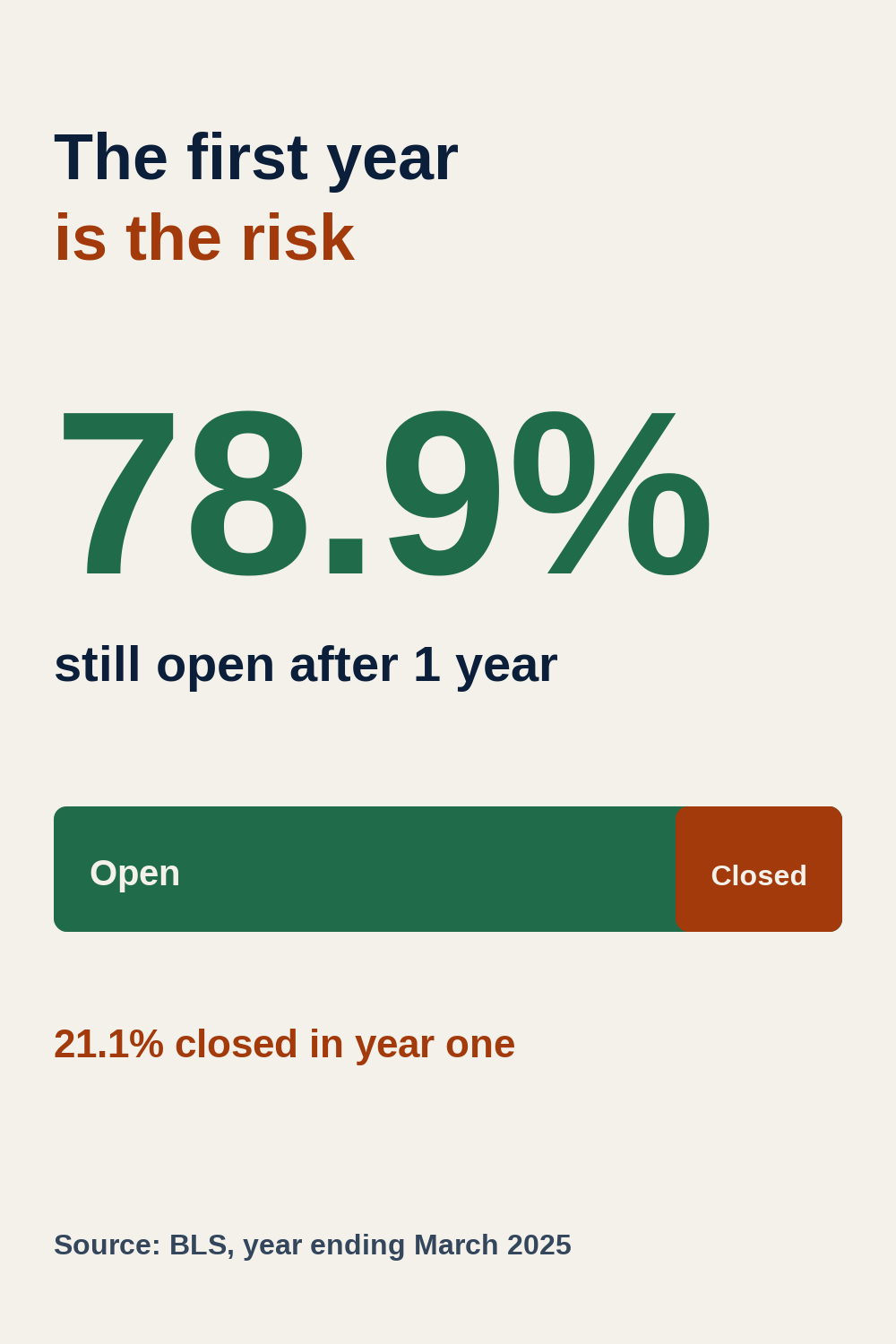
Of new U.S. private-sector locations opened in the year ending March 2025, 21.1% had closed after one year, per BLS data. Closure risk is front-loaded into the first 12 to 24 months, when cash reserves are thinnest.
That’s the clock you’re racing if you want to know how to get your first 100 customers without paid ads. Buying clicks won’t beat it. The average search ad click cost $5.42 in 2026, up from $4.22 in 2023, and an unproven offer burns that money fast.
The cheaper route is slower to start. You message people directly, collect proof, and show up where buyers already ask for help. This guide gives you a 5-step plan for doing exactly that. By the end, you’ll know which step to do first.
Why is winning your first customers so hard without ads?
Start with the odds. Of the locations opening in the year ending March 2025, 78.9% were still open a year later. Only 47.2% of the March 2021 cohort had survived 5 years by March 2026.
Paid clicks get pricier while you wait. WordStream’s benchmarks put the average search cost per click at $4.22 in 2023, $5.26 in 2025, and $5.42 in 2026.
The average cost per lead rose 5.13% too, from $66.69 in 2024 to $70.11 in 2025. (Ads rent attention. They don’t build any.)
Trust is the other wall. BrightLocal’s 2026 survey found that 47% of consumers won’t use a local business with fewer than 20 Google reviews. And 47% of small businesses hold fewer than 20. Meanwhile, 72% of buyers compare three or fewer options, and 75% decide in under 30 minutes.
Picture a local service provider with an unfinished Google profile and no prices on the page. A buyer comparing three options will skip them within minutes.
You’re short on money and short on proof. Direct work fixes both.
How to get your first 100 customers without paid ads in 5 steps
Each step does one job: find buyers, test demand, collect proof, get found, or keep them. Do them in order and each one feeds the next.
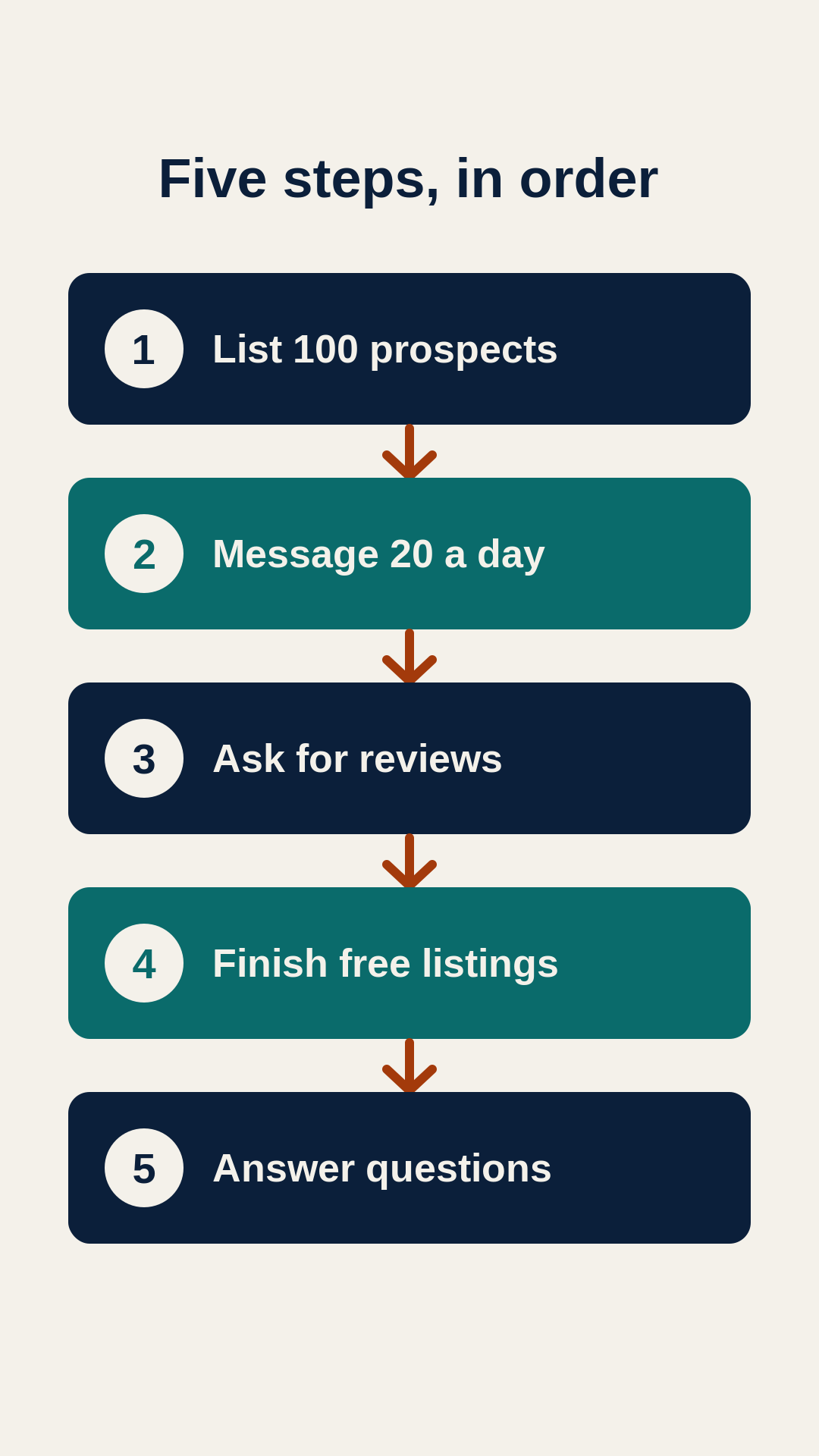
- Build a list of 100 real prospects. Write down ex-colleagues, past contacts, and the narrowly defined buyers you’d serve first. Put them in a free CRM. HubSpot’s free plan supports up to 1 million contacts and 500 sales emails a day, so a 100-row list won’t hit a limit.
- Message 20 people a day. Keep each note to four sentences. Ask for 10 minutes of honest feedback and offer free early access or an early-bird discount. In one worked scenario, a week or two of this converts 5 to 10 active users. If friends buy once and never reorder or refer anyone, that’s courtesy, not demand.
- Ask every buyer for a review and an email address. After each order, send a short check-in and invite happy buyers to post a Google review. Add a free Net Promoter Score survey. Chase the 20-review floor first. Brevo’s free plan caps sends at 300 emails a day, per third-party pricing summaries, which is plenty for a first 100.
- Finish your free listings. 52% of consumers start their most recent local search on Google, yet only 35% of small businesses maintain their Google Business Profile. Add hours, photos, a clear price, and one contact or booking option. Missing contact info (32%), thin reviews (30%), and unclear pricing (29%) knock you off a buyer’s shortlist.
- Answer questions where buyers already ask. Pick 2 or 3 niche forums, groups, or local communities. Post one thoughtful answer a day to a complaint thread. Skip launch links. Then point people to a page with clear pricing and one booking button.
Which step first? If you serve a local area, start with steps 3 and 4. If you sell to other businesses, start with steps 1 and 2. Skip step 5 until you have a few buyers to point to.
💡 STRATEGY AT A GLANCE
The Zero-Ad First 100 Plan
Primary Objective: Win your first 100 customers with direct outreach and free tools
Core Execution Pillar: Daily one-to-one messages backed by early reviews
Key Success Metric: Active buyers who reorder or refer someone, plus 20 Google reviews
Which early mistakes quietly stall your first 100 customers?
Four errors show up again and again in zero-budget launches.
- Counting courtesy sales as demand: Friends and family often buy once to be kind, which hides whether strangers want the offer. Strategic Fix: Track reorders, referrals, and orders from people you don’t know.
- Posting launch links in founder groups: Peer-founder communities like r/startups aren’t where your buyers hang out. Strategic Fix: Answer complaint threads in the groups your actual customers read.
- Letting buyers leave without an email: More than 70% of small businesses don’t plan to invite new holiday customers onto an email list or loyalty program. Strategic Fix: Ask for an email address at the moment of sale and send one check-in.
- Leaving the Google profile half done: Only 35% of small businesses maintain theirs, so a complete one stands out. Strategic Fix: Fill in hours, pricing, and contact details this week.
(The shoebox of business cards counts as a prospect list. A bad one.)
Frequently asked questions
How can I get my first 100 customers with no money?
Start with direct outreach, since it costs time, not cash. List 100 real prospects, message 20 a day, and ask every buyer for a review and an email address. Free tools like Google Business Profile, HubSpot CRM, and WhatsApp Business cover the rest.
How long does it take to get 100 customers?
The sources behind this guide contain no verified benchmark for how long reaching 100 customers takes, so any fixed number would be a guess. One worked scenario turns daily outreach into 5 to 10 users in a week or two. Track messages, replies, and orders weekly.
What is the fastest way to find your first customers?
The fastest way to find your first customers is to message people directly. A list of 100 prospects, 20 short messages a day, and free early access for honest feedback tests demand quickly. Local businesses should also finish their Google Business Profile, since 52% of buyers start there.
What percentage of new businesses fail in the first year?
In Bureau of Labor Statistics data for locations opening in the year ending March 2025, 21.1% had closed after 1 year and 78.9% remained open. Closure risk is front-loaded into the first 12 to 24 months. That’s why proving demand before spending on ads matters.
How can a small business improve retention on a budget?
Capture an email address at every sale, then follow up. More than 70% of small businesses don’t plan to invite new holiday buyers onto an email list or loyalty program. Brevo’s free plan allows 300 emails a day, enough for post-purchase check-ins and repeat offers.
Your next move
You don’t need a budget to win your first 100 customers. You need a list, a daily habit, and proof you can show strangers.
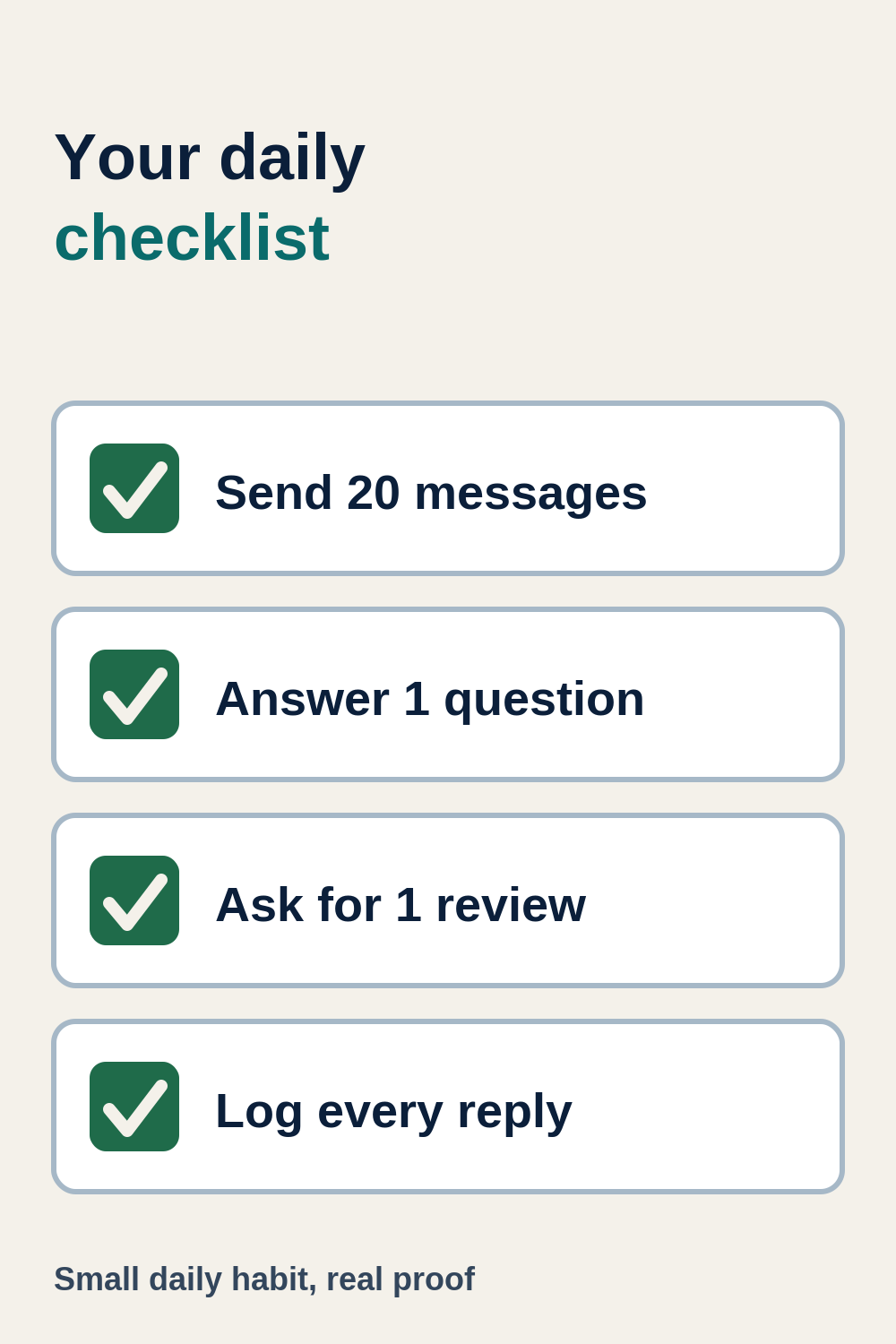
Today, write down 20 names and send the first 5 messages before lunch. Keep each one to four sentences and ask for 10 minutes of honest feedback. That’s under 30 minutes of work.
Don’t expect the first week to look impressive. Every reply, review, and email address you collect now compounds later. A small system you run daily beats a big plan you start next quarter.

Leave a Reply
You must be logged in to post a comment.