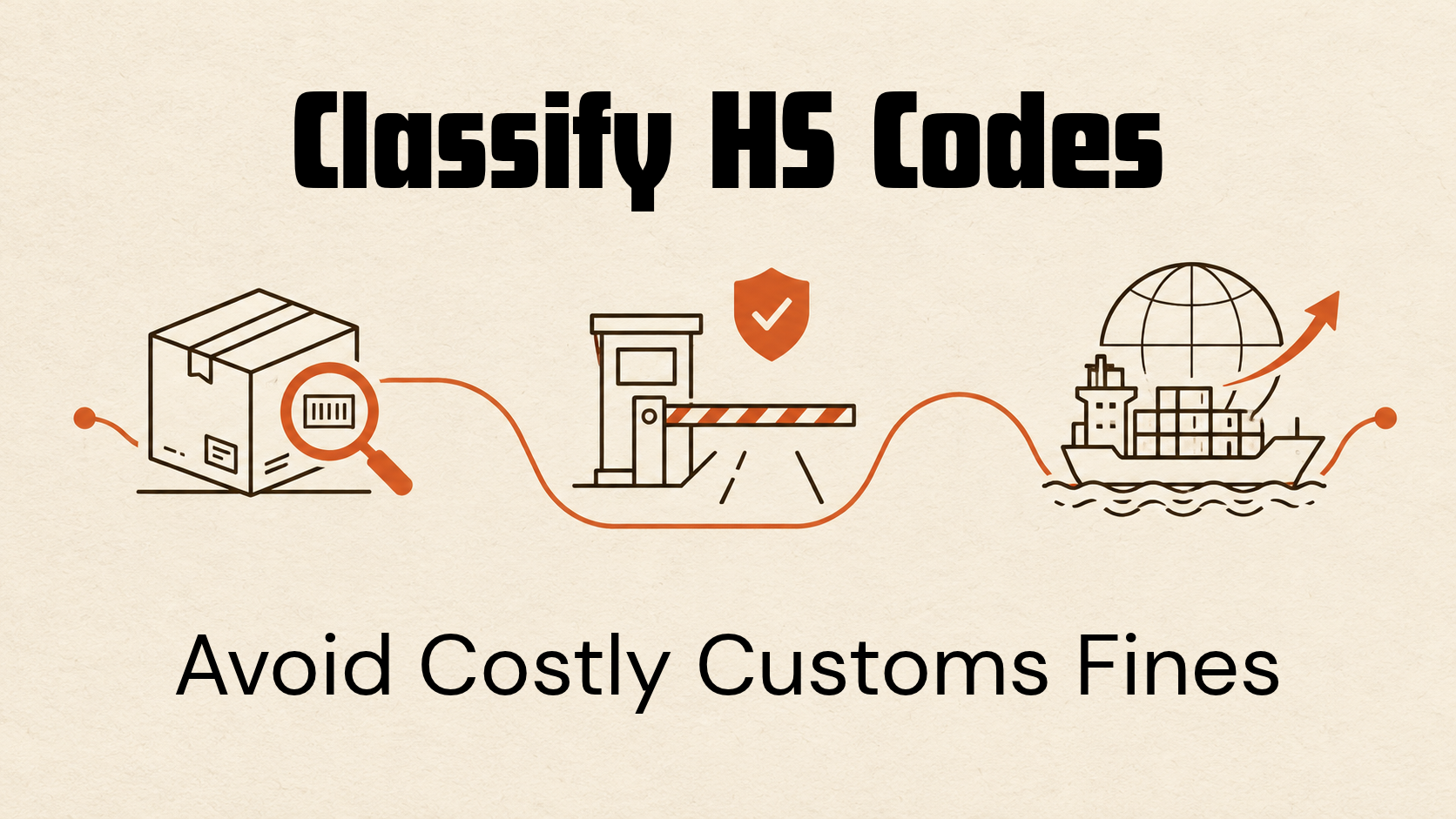
Knowing how to classify HS codes can keep one wrong digit from wiping out a shipment’s profit. U.S. Customs and Border Protection holds the importer responsible for every code on the paperwork, even when a broker files it. This guide gives you a three-step process, the mistakes that trigger audits, and clear answers to common questions.
What Does a Wrong HS Code Actually Cost You?
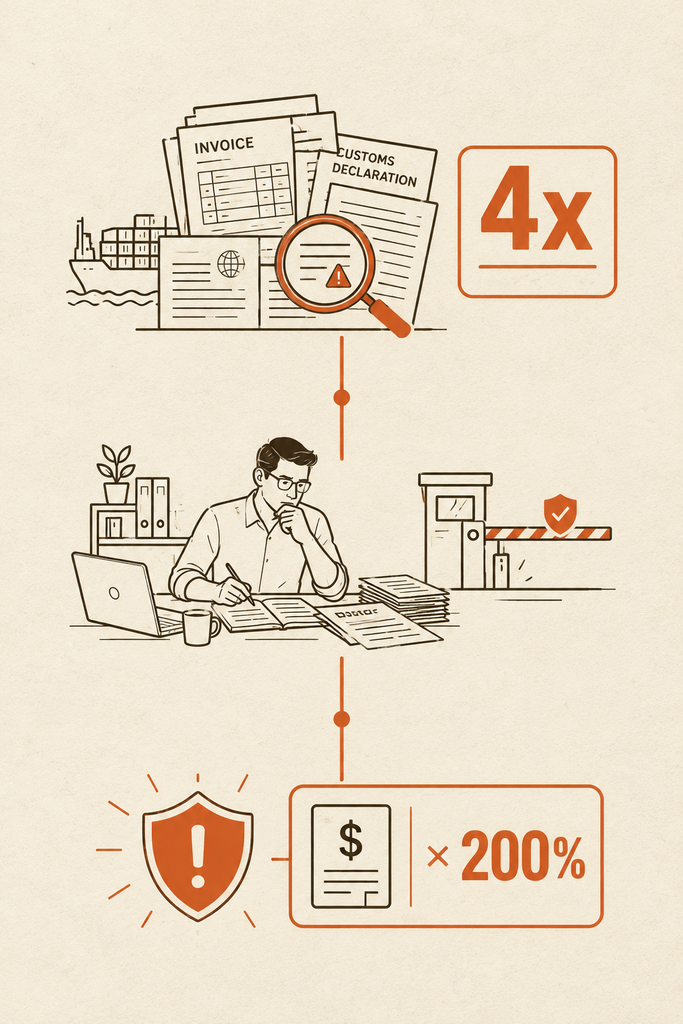
Customs agencies check declared codes against product descriptions, and they audit shipments after goods clear. Data from the Australian Border Force shows tariff classification errors rose from 117 to 444 between fiscal 2023-24 and 2024-25, nearly four times as many. Classification was the biggest contributor to import declaration errors, at 15.8%.
Small importers feel this most. Few have a compliance team to catch a wrong code before the goods reach the border.
Picture an apparel brand that picked its codes from a quick internet search. If a post-entry audit finds a mismatch, a negligence penalty under 19 U.S.C. § 1592 can reach two times the lost duties, capped at the goods’ domestic value. Underpay $5,000 in duties and the penalty can hit $10,000, on top of the $5,000 you still owe.
How to Classify HS Codes in 3 Simple Steps
A repeatable process beats guesswork, especially as your product list grows.
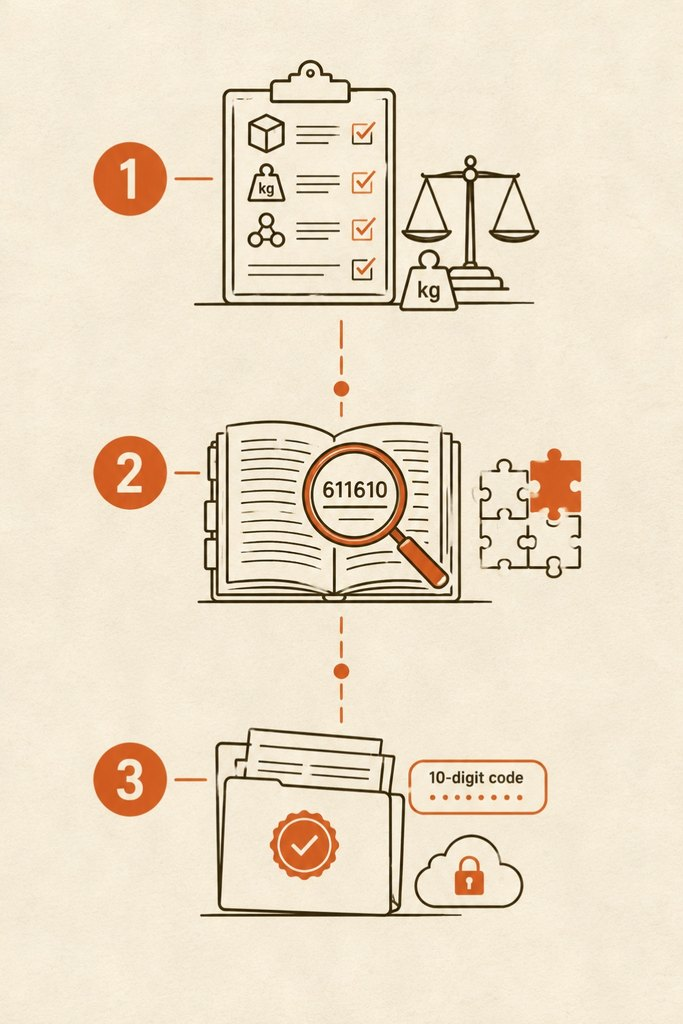
- Describe the product in detail
Write down what it is made of, how it works, and what it is used for. For mixed materials, note each material’s share by weight. Customs checks these facts in an audit, so vague descriptions put you at risk. - Find the heading and apply the rules
Learning how to classify HS codes starts with the six digits that more than 200 countries and economies share. Search the tariff for the right chapter and heading, then apply the General Rules of Interpretation in order. For mixed materials or sets, choose the part that gives the product its essential character. - Add national digits and keep your proof
Add your destination’s extra digits last, which makes 10 digits for U.S. imports. Compare your pick with public customs rulings on similar products, such as CBP’s rulings database. Save the spec sheet and your reasoning in one file per product.
Critical Customs Mistakes That Destroy Profit Margins
Assuming broker indemnity.
“Assuming your broker takes the blame.” Many owners think hiring a licensed customs broker protects them from fines. In most cases, customs bills back duties and penalties to the importing business, not the broker.
Relying on marketing descriptions.
Selecting product codes based on commercial sales titles rather than technical composition leads to severe misclassifications. Customs authorities evaluate physical properties and material breakdowns during audits rather than promotional claims.
Ignoring foreign national extensions.
“Reusing your home country’s codes.” Many exporters reuse their home country’s 10-digit code on every shipment. Other countries add their own extra digits, so the wrong ending can trigger holds and delays.
Frequently Asked Questions
What Do Small Importers Ask Most About HS Codes?
Is an importer legally responsible for fines if a licensed customs broker assigned the wrong HS code?
Yes. The Importer of Record carries the legal duty to use reasonable care, and that duty stays with you even when a broker files the entry. Customs can bill penalties to your business, not just the broker. Pick brokers carefully and review every code they file.
How often does the World Customs Organization update global HS code definitions?
The World Customs Organization (WCO) updates the HS about every five years. HS 2022 is the current edition, and the next one, HS 2028, takes effect on January 1, 2028. When a new edition lands, compare your codes against the WCO correlation tables, because some codes split, merge, or disappear.
How should an importer classify a bundled gift basket containing multiple distinct retail items?
Retail sets fall under General Rule of Interpretation 3(b). Pick the item that gives the set its essential character, based on factors like value, weight, or purpose. Then classify the whole basket under that item’s code, and write down why you chose it.
What records prove I know how to classify HS codes if customs audits me?
Keep product spec sheets, material breakdowns, design drawings, and any past binding rulings. Add a short note on which rules you applied and why. These records show reasonable care, and they let you defend your code if an auditor questions it later.
What is the structural difference between an HS code, an HTS code, and a Schedule B number?
The universal six-digit HS code standardizes global product categories across more than 200 countries. Domestic HTS codes add national extensions for imports, while Schedule B numbers are 10-digit codes specifically required for tracking export data originating from the United States.
CONCLUSION
Knowing how to classify HS codes is one of the simplest ways to protect your import margins. This week, pull your product list and confirm every code has a spec sheet and a written reason behind it.
Next, read How an Import-Export Business Really Works (USA-Asia), Operational Steps, Risks & Profit Strategies in 2026 and tell us in the comments which HS code mistake has cost you the most.


Leave a Reply
You must be logged in to post a comment.